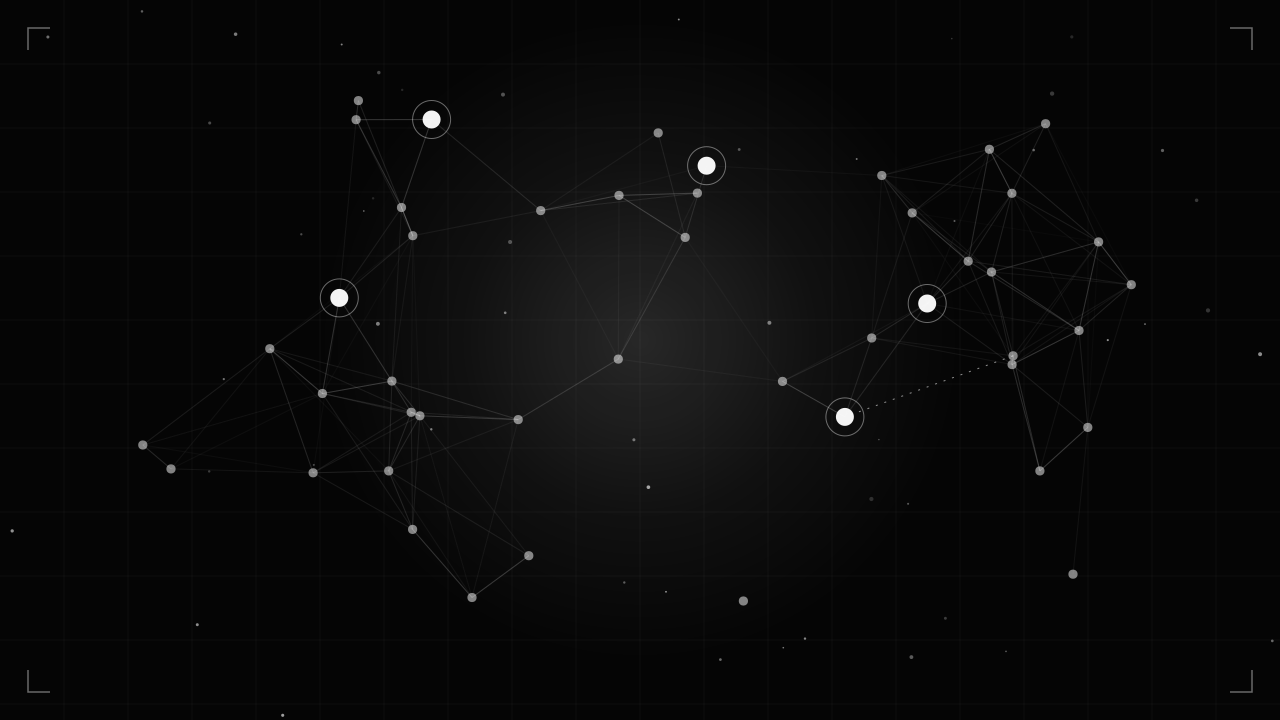
A trust graph is easy to draw and hard to trust. The version in Astrolune is built from one primitive only: an attestation — a signed statement, recorded on-chain, that operator A has reason to believe operator B runs a real node. Everything else in this post is arithmetic over those facts.
Edges are facts
An edge carries no opinion. It says nothing about affection, reputation or stake; it records that two identities attested to each other's existence at a particular height. That narrowness is deliberate — the less a single edge can mean, the less a forged or purchased one is worth.
The graph is recomputed every epoch from scratch. There is no accumulated score to defend and no history to poison slowly: each recompute starts from the raw attestations and rebuilds every number.
Dispersion discounts orchestration
SybilRank propagates trust from high-degree seeds outward, which alone would reward anyone who collects many edges quickly. The discount for temporal dispersion closes that door: edges whose arrival times cluster into one window contribute far less than the same edges arriving scattered across weeks. Organic growth is messy; farms are punctual.
The external challenge
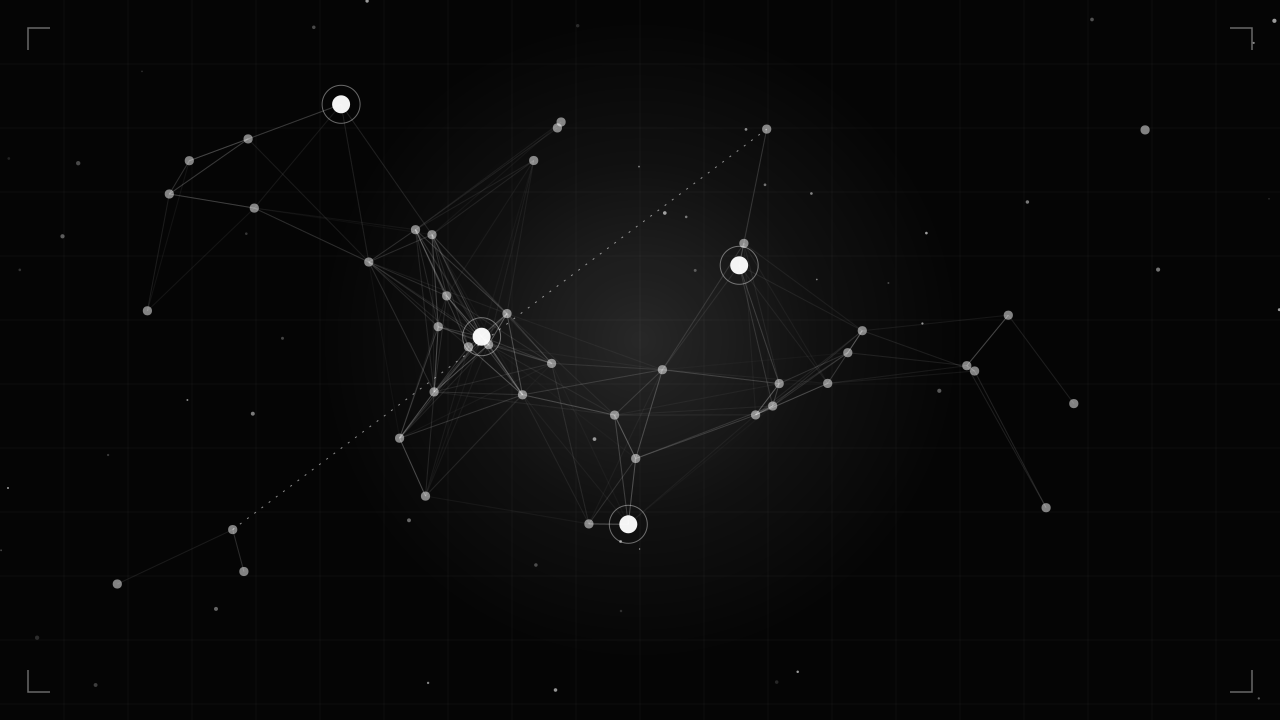
Once per epoch the protocol pairs every node with a peer it has no edge to and poses a small verification task. A node whose graph position cannot be explained by its answers loses graph weight — quietly, arithmetically, without any accusation being issued.
This is the piece that keeps the graph honest against its most annoying failure mode: not forged edges, but real edges between nodes that share one owner. Attestations between siblings are facts too; dispersion and challenges exist so they stop being sufficient ones.
A heuristic is not a proof. The specification says so in writing, and so does the consensus page: a patient adversary with a well-spread farm and a proxy budget is priced, not excluded.
What we do not claim
Three things are recorded as open rather than glossed:
- Non-domination of the whole system is argued, not proven.
- Dispersion windows are parameters, and parameters can be tuned around.
- The challenge samples one pairing per epoch per node — enough to make farming expensive, not impossible.
The research goal for the next revision is narrower and reachable: make the cost of a surviving farm grow superlinearly with its size. The current dampeners already push in that direction; the open question is whether they can be shown to push fast enough.